Search this site
156 results found with an empty search
- The Practical Path: How to Pray During Your 21 Days
We have spent time discussing what we are taking off our plates. But as we have shared before, if we do not intentionally fill that space with prayer, we are simply going through a physical exercise. Fasting is the "amplifier," but prayer is the "broadcast." To truly see breakthrough in 2026, our fasting and our praying must be in alignment. We want to give you a clear roadmap for your prayer life during these 21 days so that you never have to wonder, "What should I be praying about today?" The Biblical Model: Petition vs. Demand Before we dive into our specific points, we must set our heart posture. In modern culture, we are often told to "manifest" our desires or "declare" our reality. However, as your pastoral team, we want to bring us back to the heart of the Bible. In Matthew 6 , Jesus did not tell us to "demand" our daily bread; He told us to ask for it. Biblical prayer during a fast is an act of humble petition . We approach the throne of grace with confidence ( Hebrews 4:16 ), but also with the understanding that His will is perfect. God already knows what we need ( Matthew 6:8 ), and often, we are the ones who are confused by our own desires. This fast is an invitation for Him to speak to us directly and for us to condition ourselves to wait on His direction so we are not blinded by our own will. The Ten Prayer Points of Focus To help you develop your prayer time with honesty and depth, we have outlined ten areas of focus. These serve as our corporate guide—points of agreement for our families, life groups, and individual time with God. Use these prompts to spark a deeper conversation with the Father. Thanksgiving for a New Year: Before we ask for anything, we acknowledge everything He has already done. Thank God for His faithfulness, protection, and provision throughout the past year. Ask for hearts filled with gratitude as we enter this new season. A heart of thanks is the best soil for a miracle. Scriptures: Psalm 118:24; Lamentations 3:22–23 Personal Renewal & Spiritual Growth: Fasting often exposes the "clutter" in our souls. Ask the Holy Spirit to renew your passion for prayer and the Word. Pray for a heart of obedience, holiness, and a renewed sensitivity to God’s leading in your private life. Scriptures: Psalm 51:10; Romans 12:1–2 Guidance & Vision for 2026: We do not want to move unless He moves. Pray for clarity in God’s purposes for your life and your family. Ask for divine wisdom in every decision, planning session, and direction you take this year. Scriptures: Proverbs 3:5–6; James 1:5 Strengthening Families & Marriages: The enemy often targets the home first. Pray for unity, healing, and protection over households. Lift up parents, children, and caregivers, asking for an abundance of grace and peace to navigate daily pressures. Scriptures: Joshua 24:15; Psalm 127:1 Health, Healing & Wholeness: God is our Great Physician. Ask Him for physical, emotional, and mental restoration. Specifically pray for freedom from anxiety, fear, and discouragement, which can so easily weigh us down in a busy city like Brampton. Scriptures: Jeremiah 30:17; 3 John 1:2 Church Mission & Ministry: Pray for a fresh anointing over our pastors, leaders, and volunteers. Ask for growth in discipleship, evangelism, and our collective impact. Pray that Hope City would be a beacon of hope for the hurting. Scriptures: Matthew 28:19–20; Ephesians 4:11–13 Outreach & Community Transformation: We are called to be salt and light. Pray for opportunities to bring Christ’s love into our city. Ask for open doors in schools, neighbourhoods, and local organisations where the Gospel can make a tangible difference. Scriptures: Matthew 5:14–16; Isaiah 58:6–12 Youth & Next-Generation Leaders: Our young people face unprecedented challenges. Intercede for the youth of Hope City. Pray they would have the courage to lead with integrity and that God would raise up bold, godly leaders who aren't afraid to stand for the Truth. Scriptures: 1 Timothy 4:12; Psalm 119:9 Financial Provision & Stewardship: We serve a God of "more than enough." Pray for God’s provision for families, businesses, and the church. Ask for wisdom in stewardship and a spirit of radical generosity to support the work of the Kingdom. Scriptures: Philippians 4:19; 2 Corinthians 9:8 Global Peace, Justice & Revival: We are part of a global family. Pray for nations in conflict and for world leaders to act with wisdom and compassion. Ask for a global move of God bringing salvation, unity, and hope to the ends of the earth. Scriptures: Psalm 46:1–10; Habakkuk 3:2 Deep Study Note: The Nature of Persistent Prayer Adapted from the Life Application Study Bible In Luke 18:1-8 , Jesus tells the parable of the persistent widow to teach us that we should "always pray and not give up." It is easy to confuse "persistence" with "persuasion." We do not persist in prayer because God is stubborn and needs to be convinced to help us. We persist because we need the time to be conditioned. Fasting and persistent prayer strip away our self-reliance. When we pray for 21 days about the same point, we begin to see that point through God’s eyes rather than our own. We move from asking God to "fix our problem" to asking God to "fulfil His purpose." Persistence is not about changing God's mind; it is about God changing our hearts until they align with His perfect, sovereign will. Scripture Meditation: "I wait for the Lord, my whole being waits, and in his word I put his hope." — Psalm 130:5 (NIV) Practical Tools for the Journey Start with Worship: Don't rush into your list. Spend time in worship first to align your perspective with the magnitude of who God is. When we see how big He is, our problems start to look much smaller. Pray Scripture: When you don't know what to say, pray the Word. The Bible is the highest authority; when we pray His Word, we are praying His heart back to Him. The Power of Agreement: Talk with your spouse, family, or friend groups to create specific points on which you agree. Sitting down to record these creates a shared mission for these 21 days. As Matthew 18:19 says, there is unique power when two agree on earth. Keep a Journal: We highly suggest getting a notebook or using a digital space to record what you are specifically praying for. Record the date and the scripture you are standing on. Over these 21 days, track the vibrant colour of His grace as He speaks to you. We must condition our minds that the right response to His instruction is to wait for His leading, be obedient to His command, and continue to seek His guidance. Remember, just because we received an answer does not mean we have the whole answer. A relationship with God means we must continually spend time making room for Him so He can lead us step-by-step. A major part of this journey is learning the discipline of "waiting on the Lord." In the silence of your fasting and prayer, you may hear Him convicting you of an attitude or directing you toward a specific act of obedience. Do not criticize the process if it feels slow. Trust that He is conditioning you for what is ahead. Frequently Asked Questions (FAQ) What is the biblical 'right way' to pray—should I follow a list or wait for the Spirit? The Bible provides justification for both structure and spontaneity. Jesus provided a specific template in Matthew 6:9-13 (The Lord’s Prayer) because structure helps focus our hearts. However, we also see the Holy Spirit leading believers to pray as specific needs arise ( Romans 8:26-27 ). The "right way" is defined by obedience and alignment with His Word. Whether you use our ten points daily or follow a specific internal "push," ensure your heart is in the right place, asking according to His will ( 1 John 5:14-15 ). How do I handle distractions and a lack of focus? Prayer requires intentionality. Jesus often withdrew to "lonely places" to pray to remove external noise ( Luke 5:16 ). If your mind wanders, use the Word to realign. Praying aloud or "praying the Psalms" can help keep your thoughts from drifting, as the psalmists often did when their hearts were overwhelmed ( Psalm 61:1-2 ). Removing digital distractions is also an act of discipline that creates room for His voice. When is the best time to pray according to Scripture? Scripture shows God’s people praying at all times: at daybreak ( Psalm 5:3 ), at noon ( Psalm 55:17 ), and even through the night ( Luke 6:12 ). Your schedule should reflect your personal and family commitments. While we strive to "pray without ceasing" ( 1 Thessalonians 5:17 ), we offer corporate sessions to help you stay consistent: Virtual Prayer: Mon, Tue, and Thu at 8 AM, Noon, and 8 PM. In-Person Prayer: Wed and Fri at 7 PM at Hope City Church. Even on days with appointments, keep a heart of prayer. How do I know if I'm praying for the right things? The true point of fasting is really to align ourselves with God's will in the areas we are praying over. While we bring our needs or concerns to Him, we must always seek His will for that area over our own. The Holy Bible tells us to check our motives; James 4:3 warns against praying with wrong motives to satisfy our own desires. When we "remain in Him," our desires begin to match His ( John 15:7 ).
- The Practical Path: Choosing How to Fast for the 21 Days
As we get closer to January 4th , the most common question we are hearing is: "What does this actually look like on a Tuesday afternoon?" It’s one thing to talk about the heart of fasting, but it’s another to decide what you’re putting on your plate—or taking off of it. We want to give you some specific "lanes" you can choose for this 21-day journey. Remember, our goal as a team isn't for you to pick the "hardest" lane to impress God; it’s to pick the lane where you can most effectively sacrifice your comfort to hear His voice, while still being a good steward of the responsibilities He has given you. The Biblical Categories In Scripture, we see several ways people approached fasting. At Hope City, we encourage you to pray about which of these "lanes" fits your current season of life: The Normal Fast: This is abstaining from all food and drinking only water. Some choose to do this for a day or two at a time during the 21-day window. We see Jesus do this in Matthew 4:2 , where it says after forty days of fasting, "he was hungry." The Partial Fast (The Daniel Fast): Based on Daniel 10:3 , where Daniel says, "I ate no choice food; no meat or wine touched my lips." This is the most common for a 21-day stretch. It involves eating "foods of the earth"—vegetables, fruits, and grains—while sacrificing meats and sweets. This is excellent for those with high-energy demands, as it keeps you fueled while maintaining a daily sacrifice. The Intermittent Fast: You may choose to fast from sunrise to sunset, taking only one meal in the evening. This mirrors the pattern often seen in the Old Testament where people would fast until evening (see Judges 20:26 ). It is a powerful way to stay in a posture of prayer throughout your peak hours of labor. The Absolute Fast: No food and no water. In Esther 4:16 , Queen Esther requested her people to "neither eat nor drink for three days, night or day." Note: As your pastors, we advise that this is rare and should only be done for very short periods (1-3 days max) and under specific spiritual leading. Sacrifice vs. Comfort: The "Coffee" Test A question we get every year is: "Pastors, what about my coffee?" Here is the rule of thumb we use: " Is it for sustenance or is it for pleasure?" If you drink coffee because you love the ritual and the "treat" aspect of it, giving it up is a powerful sacrifice. However, if you have a high-demand schedule—perhaps you’re a parent up all night with a toddler or you’re working a double shift—and you need the caffeine to function safely, you might choose to keep it. But try taking it "black." We want to avoid "loophole fasting" where we just find ways to stay comfortable while technically "fasting." Sustenance vs. Pleasure (Liquid Fasts) Some of you may choose a Liquid Fast , consuming only smoothies, juices, or protein shakes. This is a valid path, especially if your daily labor—whether at an office, on a job site, or managing a household—requires a lot of physical stamina. The key here is the intent . You aren't blending a gourmet meal so it fits through a straw; you’re taking in just enough nutrients to keep your body functioning so your spirit can keep praying. As the Life Application Study Bible notes on Matthew 6 , the purpose is to "set aside the usual" to focus on the eternal. Filling the Space: Prayer is the Point If you only skip meals, you’re just on a diet. Fasting without prayer is just being hungry. The whole point is to sacrifice a physical comfort and fill that new "space" in your schedule with prayer. We aren't doing this to coerce God into blessing us. He has already sacrificed everything for us through Jesus. We fast and pray to honour His sacrifice and seek a deeper relationship with Him. It’s about aligning our hearts with His, not convincing Him to align with ours. A Heart of Expectation While we’ve made it clear that this is not a ploy to get God to comply with our wishes, we should approach these 21 days with a high level of spiritual expectation. When your heart posture is correct, God honours the moments when we give Him our best. As we see in Hebrews 11:6 , He is a rewarder of those who diligently seek Him. We believe that as you prioritize prayer, He will respond. However, we must also remember that His will is perfect. Realistic expectations for this season include: Relational Growth: You will grow significantly in your intimacy with the Father. Perfect Timing: His answers will come in His perfect time and His perfect way—which is often different than ours. Spiritual Sensitivity: You will become more attuned to His voice and leading. Our challenge to you is to not look for the specific answer you’ve already decided on, but to be open to His voice and prepared to be obedient to whatever He says. Frequently Asked Questions (FAQ) What if I cannot start on January 4th? While there is a special power in the "corporate" fast (all of us doing it together), life happens. If you are traveling or have a major life event that makes starting on the 4th impossible, just jump in as soon as you can. It’s better to give God 14 days of your best than 21 days of nothing at all. What if I cannot last the full 21 days? Don't let the enemy trap you in guilt. If you "slip up" on day 12, don't quit. Fasting is a discipline, not a legalistic contract. Just like Peter when he walked on water and started to sink, Jesus is right there to catch you. Repent, get back on the horse, and continue for the remaining days. Similarly, if there are specific considerations like health, commitments, etc you can adjust your fast to ensure that the length of the fast does not compromise your well-being. This is about willing sacrifice, not destruction or punishment. I have a medical condition. How can I participate? Wisdom is a spiritual gift! If you have health restrictions, pregnancy, or chronic illness, we do not recommend a complete food fast. You can participate by doing a Daniel Fast, a "Media Fast," or by giving up specific comforts (like coffee or sweets). God sees the sacrifice of the heart, not just the contents of the stomach. I have to take medication with food. What do I do? Please do not skip your medication or take it in a way that is unsafe. If your medicine requires a full meal, then that is your "lane." You might choose to do a Daniel Fast (changing what you eat) or fast from something else entirely, like social media or television. Your health is a gift from God; we want you to be a good steward of it. Do we have to abstain from sex during the fast? If you are single or unmarried, the Bible already calls us to honour God with our bodies through purity. If you are married, 1 Corinthians 7:5 says: "Do not deprive each other except perhaps by mutual consent and for a time, so that you may devote yourselves to prayer." If you and your spouse feel that this might be a distraction or that it aligns with a specific breakthrough you are praying for, we suggest you discuss and agree on what that commitment looks like together. I don’t know how to pray or what to pray about. Where do I start? A great place to start is the Lord’s Prayer (Matthew 6:9-13) . Use it as a template. Or, start by simply thanking God for what He has done, then move into praying for our church, your family, and your neighbours here in Brampton. You can also click here to join our prayer sessions via Facebook and Zoom. Our next article will help you plan your prayer points and join with us corporately through the next 21 days.
- The Power of the Pair—How Prayer and Fasting Work Together
In our first lesson, we looked at the heart of fasting. But many Christians stop at the "sacrifice" without ever tapping into the "power." If you fast without an intentional prayer life, you are simply practicing self-discipline. When you combine them, you are engaging in spiritual warfare. I. The "Isaiah 58" Filter: Checking the Foundation Before we look at the power of this pair, we must address the blockage . In Isaiah 58:1-5 , the Israelites complained: "Why have we fasted, and You have not seen it?" God’s answer exposes the difference between a religious routine and a spiritual breakthrough . He notes that they were: Seeking their own pleasure while fasting. Mistreating others (exploitation and strife). Fasting for "show" rather than for "change." Deep Study Note: God defines the "True Fast" in verses 6-12 not as a way to get something, but as a way to become something. A fast is only "deep" if it produces a heart of justice, mercy, and selflessness. If your prayer life during these 21 days isn't leading you to love people better, you are missing the biblical mark. II. The Theology of Synergy: Why the Body Matters to the Spirit Why does what we do with our stomach affect our conversation with God? A. Breaking the "Flesh" Barrier In Galatians 5:17 , Paul describes a constant war between the "flesh" (our natural desires) and the "Spirit." The flesh is loud; it wants comfort, food, and instant gratification. When we fast, we are physically "starving" the influence of the flesh. This creates a vacuum that only the Holy Spirit can fill. B. The "Legal" Authority of Intercession In the Bible, we see that God has given humanity authority on earth (Psalm 115:16). Prayer is the way we "invite" the King of Heaven to intervene in the affairs of earth. Fasting adds weight to that invitation. It proves our desperation and our sincerity. It is a physical sign of a spiritual truth: I am empty without Your intervention. III. Case Study: Daniel’s Model of "Fasting Prayer" To move from "shallow" to "deep," we must look at Daniel 9:1-19 . This is one of the most powerful prayers in the Bible. Notice the structure: Based on the Word (v. 2): Daniel didn't start fasting because he felt like it. He was reading the Prophet Jeremiah and realized the time for captivity was supposed to be over. Lesson: True fasting prayer begins with knowing what God has already promised in His Word. Identifying with Sin (v. 5-6): Daniel says, "We have sinned and done wrong." He didn't just pray for himself; he stood in the gap for his nation (Brampton, our families, our church). This is called Identificational Repentance . Appealing to God’s Character (v. 18): Daniel prays, "We do not make requests of you because we are righteous, but because of your great mercy." Fasting doesn't make us "worthy" to be heard; it humbles us so we can rely entirely on God's mercy. IV. The Mark 9:29 Principle: Levels of Spiritual Conflict When the disciples failed to cast out a demon in Mark 9 , Jesus pointed to a specific reality: "This kind can come out by nothing but prayer and fasting." This suggests a "hierarchy" in the spiritual realm. Some blessings are easily accessed through simple prayer. Some "strongholds" (generational sins, deep addictions, territorial spirits over cities) are "stubborn." They are anchored in the flesh. Fasting breaks the anchor. By denying the physical, you are attacking the spiritual root of the problem. You are refusing to give the enemy any "ground" in your life. V. Moving Deeper: Your Prayer Strategy For these 21 days, do not pray "general" prayers. Create a Prayer Decree based on the following hierarchy: Upward (Adoration): Spend the first 10 minutes of your "meal swap" just declaring who God is. (Use Psalm 103). Inward (Consecration): Ask the Holy Spirit to "plow" your heart. Use Psalm 139:23-24 : "Search me, O God, and know my heart..." Outward (Intercession): This is where you stand in the gap. Pray for Hope City, for the lost in Brampton, and for the specific "wall" you need rebuilt. VI. Deep Study Homework Read Ezra 8:21-23. Ezra was about to lead a group of people through a dangerous journey. He was "ashamed" to ask the King for soldiers because he had told the King that God would protect them. Study Question 1: Why did Ezra feel it was necessary to fast if he already believed God would protect them? Study Question 2: What does verse 23 tell us about the result of their combined prayer and fasting? Application: What "dangerous journey" or "uncertain situation" are you facing in 2026 that requires this level of spiritual protection?
- Still Standing
Pastor Jill Neilson | Dec 29, 2025
- Why Do We Fast? Understanding the Heart Behind the Sacrifice
As we get ready for our 21 days of prayer and fasting starting January 4th , it is important to understand what we are actually doing. Fasting is a "spiritual discipline"—a habit that Christians have used for thousands of years to get closer to God. To understand fasting, we first need to understand a big word: Consecration . To "consecrate" yourself simply means to set yourself apart for God. Think of it like a specialized tool that is only used for one important job. When we fast, we are setting our bodies and our time apart specifically for Him. It is our way of saying "No" to our physical cravings so we can say a louder "Yes" to God. What is Biblical Fasting? In the Bible, fasting almost always means going without food for a specific amount of time to focus on God. While people today sometimes "fast" from social media or TV, the biblical examples focus on food because food is our most basic need. When we choose not to eat for a time, we are telling our bodies that God is more important than a meal. We are showing Him that we depend on Him even more than we depend on food. A Way to Stay Humble: In Psalm 35:13 , King David wrote, "I humbled myself with fasting." Fasting reminds us that we aren't "the boss" of our own lives—God is. A Way to Show We Are Sorry (Repentance): In the book of Joel 2:12 , God tells His people, "Return to me with all your heart, with fasting and weeping." Sometimes we use fasting to show God we are truly sorry for our mistakes and want to change. A Way to Follow Jesus: Before Jesus started His ministry on earth, He went into the desert and did not eat for 40 days ( Matthew 4:1-4 ). When the devil tempted Him to turn stones into bread, Jesus said that we don't just live on bread, but on the words that come from God. It’s About Your Heart, Not Just Your Stomach One of the biggest mistakes people make is thinking that fasting is a "rule" or a way to show off. In the time of Jesus, some religious leaders (called Pharisees) would fast just so people would think they were holy. Jesus told them that God doesn't care about the outward show; He cares about what is happening inside you. In Joel 2:13 , God says: "Rend your heart and not your garments." In ancient times, people would tear their clothes (garments) to show they were upset. God was saying, "Don't just tear your clothes to look sad; let your heart be truly broken for me." The Life Application Study Bible reminds us that if we fast but continue to be mean to others or hold onto secret sins, the fast doesn't work. If you are just skipping meals but your heart is still full of pride or anger, you aren't fasting—you’re just hungry. The goal of these 21 days is to let God change who you are on the inside. Why Should We Do It? We don't fast to "trick" God into giving us what we want. We fast so that we can be changed. Here is what happens when we fast: We Hear God Better: When our stomachs are quiet, our spirits become more sensitive. In Daniel 10:12 , an angel told Daniel that God started listening to his prayers the very first day he decided to humble himself and fast. We Get Spiritual Strength: Jesus taught that some difficult situations and "strongholds" (problems that feel impossible to move) can only be handled through prayer and fasting ( Mark 9:29 ). We Get in Step with God: Fasting helps us stop focusing on what we want and starts helping us focus on what God wants. How to Get Ready Before we start on January 4th , take this week to prepare your soul: Check Your Heart: Ask God to show you if there is any "clutter" in your life—like bitterness or bad habits—that you need to let go of. Pick Your "One Thing": What is the main reason you are fasting? Is it for your family? A new job? To know God better? Write it down so you can stay focused. Surrender Your Schedule: Tell God right now that these 21 days belong to Him. This Week’s Homework: Read Isaiah 58 in your Bible. It explains the difference between a "fake fast" and a "true fast." Ask yourself: Am I ready to give God my whole heart, or just my lunch?
- Making Room
Pastor Randy & Jill Neilson | Dec 22, 2025
- Finding The Lamb
Pastor Sue Kiteley | Dec 14, 2025
- Home For Christmas
Pastor Randy Neilson | Dec 7, 2025
- When Bones Come Alive
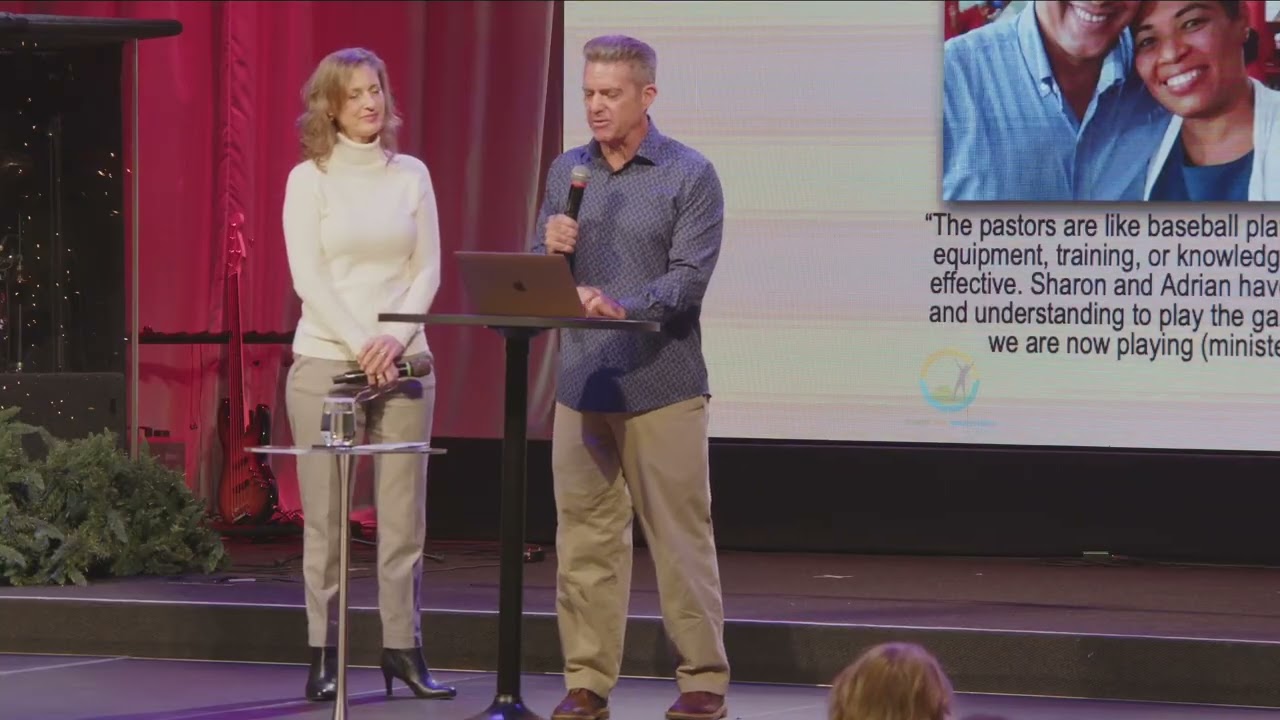
Pastor Adrian & Sharon Thomas| Nov 30, 2025
- Pulled Out by Mercy
Pastor Sue Kiteley | Nov 23, 2025
- Loose Him & Let Him Go
Bishop Bob Tacky | Nov 16, 2025
- Possessing the Gates of the Enemy
Pastor Randy & Jill Neilson | Nov 9, 2025